
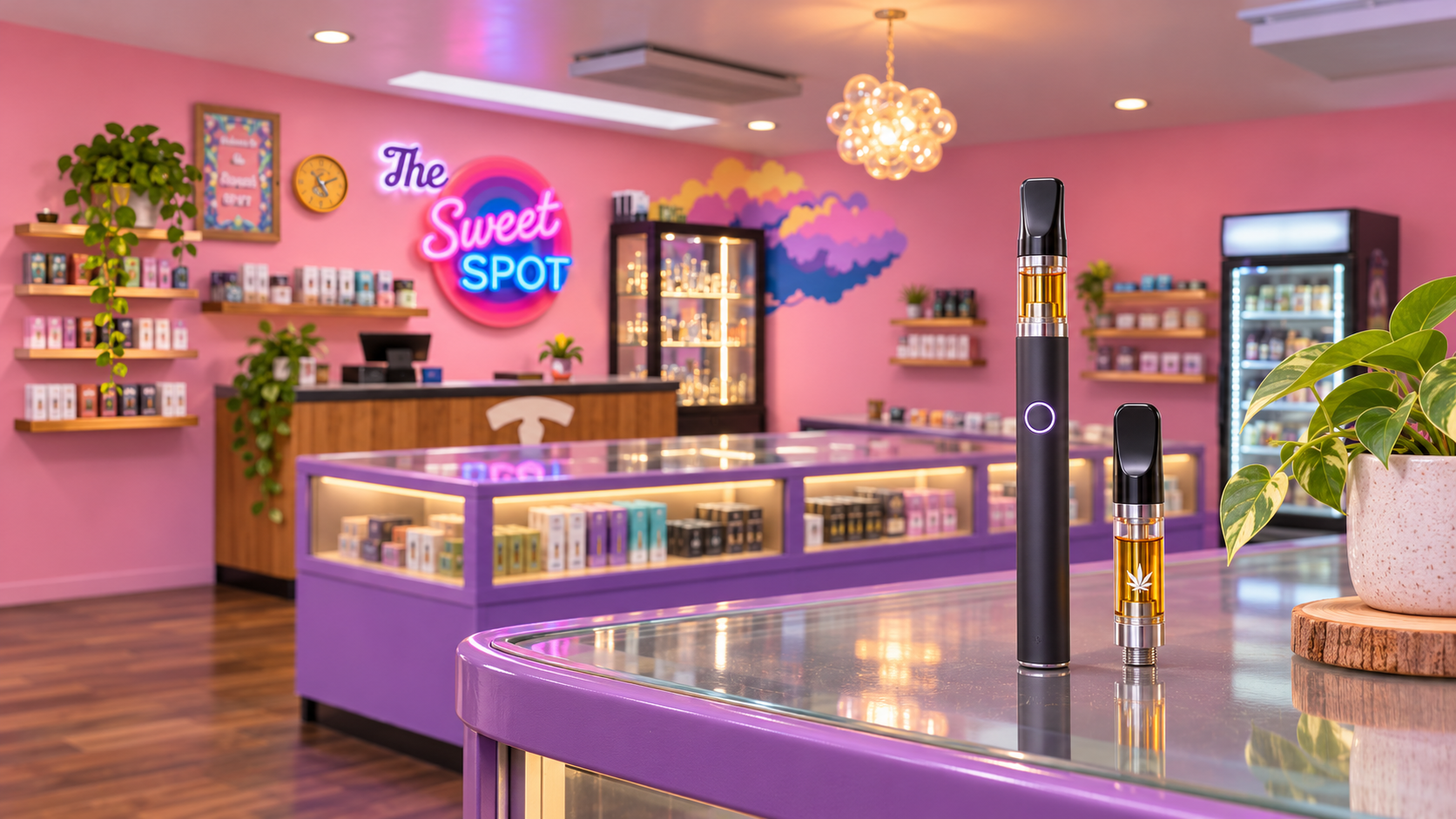
The main difference between live resin vs distillate is how the cannabis oil is produced. Live resin is typically extracted from fresh-frozen cannabis to preserve more of the plant's original aromatic compounds. Distillate undergoes additional refinement to concentrate cannabinoids, usually THC, and often has terpenes added back for flavor.
For vape cartridge shoppers, that difference can affect taste, THC concentration, ingredients, and price. Live resin carts often appeal to people interested in cannabis-derived flavor, while distillate carts are commonly chosen for consistency and affordability.
But does live resin produce stronger effects? Is distillate worth buying if it has a higher THC percentage?
Neither product is automatically better. This guide explains the key differences, what the science supports, and how to compare cartridges before buying at a dispensary in Santa Rosa.
Live Resin vs Distillate Carts: Quick Comparison
Both products contain concentrated cannabis oil designed for compatible vaping devices, but their production methods and final formulations can differ significantly.
| Feature | Live Resin Carts | Distillate Carts |
|---|---|---|
| Starting material | Typically fresh-frozen cannabis | Cannabis extract refined through distillation |
| Production method | Extraction focused on retaining plant compounds | Extraction followed by extensive cannabinoid refinement |
| THC concentration | Often lower than highly refined distillate | Often higher due to cannabinoid concentration |
| Terpenes | Often retains more original plant terpenes | Commonly contains terpenes added after refinement |
| Flavor | Usually more cannabis-forward | Depends on added terpenes and formulation |
| Effects | Depend on THC, other compounds, dose, and individual response | Depend on THC, added compounds, dose, and individual response |
| Price | Often more expensive | Frequently more affordable |
| Common formats | 510-thread cartridges and all-in-one devices | 510-thread cartridges and all-in-one devices |
| Main appeal | Original cannabis aroma and extract character | Concentrated cannabinoids, consistency, and value |
These are typical category differences, not fixed rules. Manufacturing methods, ingredient blends, hardware, and laboratory results determine the characteristics of an individual cartridge.
What Is a Live Resin Cart?
A live resin cart is a cannabis vape cartridge containing concentrate made from freshly harvested cannabis, usually frozen shortly after harvest.
Traditional cannabis processing often involves drying and curing plants before extraction. These steps can change the concentration of volatile compounds, particularly terpenes.
Live resin production aims to preserve more of those compounds by processing fresh or frozen material.
How Is Live Resin Made?
The process generally involves:
-
Harvesting cannabis plants and freezing the material soon afterward.
-
Extracting cannabinoids and aromatic compounds from the preserved material, commonly using controlled solvent-based methods.
-
Removing extraction solvents and processing the concentrate into a formulation suitable for vaping.
-
Filling compatible cartridges or all-in-one devices with the finished oil.
The important distinction is that live resin is not automatically solventless. Many live resin products are made using hydrocarbon extraction, followed by solvent removal and regulatory testing.
The finished concentrate can contain THC, other cannabinoids, and naturally occurring terpenes. However, the amount retained depends on the source material and production process.
For a closer look at the extraction method, read The Sweet Spot's guide to what live resin vape is.
What Is a Distillate Cart?
A distillate cart contains cannabis oil that has been refined to concentrate one or more cannabinoids, most commonly THC.
Instead of prioritizing the original plant's complete aromatic profile, distillation separates and concentrates selected compounds.
During processing, many terpenes and other substances are removed. This generally produces a highly concentrated cannabinoid extract with relatively little natural aroma.
How Is Cannabis Distillate Made?
Cannabis distillate production typically involves extracting cannabinoids from cannabis material, refining the initial extract, and using distillation to separate compounds based on their physical properties.
The resulting extract is often highly concentrated.
Because distillate can have a relatively neutral flavor, manufacturers may add permitted terpenes during final formulation.
These added compounds influence the finished cartridge's aroma and taste.
Distillate is also used in edibles and other manufactured cannabis products because its concentrated cannabinoid content can support consistent formulation.
Importantly, distillate is not necessarily made from low-quality material. The extraction method alone cannot establish the quality of the finished product.
Live Resin vs Distillate: Five Differences That Matter
1. Flavor and Terpene Profiles
Flavor is one of the most noticeable differences between these cartridge types.
Terpenes are aromatic compounds found in cannabis and many other plants. They contribute to scents commonly described as citrus, pine, herbal, floral, earthy, or fuel-like.
Live resin production is intended to retain more of the starting plant's natural aromatic character. As a result, a live resin cartridge may taste more closely related to its source cannabis cultivar.
Distillate generally loses much of its original terpene profile during refinement.
Manufacturers can then create a finished flavor profile using added terpenes, including cannabis-derived terpene blends.
That does not mean distillate tastes worse. Some consumers prefer its particular flavor formulation.
A useful distinction is:
-
Live resin: Often emphasizes terpenes associated with the original cannabis material.
-
Distillate: Often uses a formulated terpene blend to establish the finished taste.
Neither extraction category guarantees a particular flavor quality.
2. THC Potency and Concentration
Distillate carts frequently display higher THC concentrations because distillation is designed to isolate and concentrate cannabinoids.
Live resin concentrates retain varying amounts of additional plant compounds, which can affect the proportion of THC in the finished oil.
However, THC percentage varies significantly across products.
Consider two hypothetical cartridges:
-
Live resin cart: 75% THC
-
Distillate cart: 88% THC
The distillate contains a higher concentration of THC by weight.
But this does not establish that someone will experience exactly 13 percentage points more intoxication or that the distillate will feel proportionally stronger.
The actual amount inhaled depends on the device, puff duration, product formulation, and consumption pattern.
Individual cannabis sensitivity and previous exposure also matter.
A higher THC percentage is not automatically a higher-quality cartridge. It is one measurement to consider alongside ingredients, manufacturing, and personal tolerance.
3. Effects and the Entourage Effect
A common claim is that live resin produces a more complete or balanced cannabis experience because it contains more naturally occurring compounds.
This idea is often associated with the entourage effect, the hypothesis that cannabinoids, terpenes, and other cannabis compounds may interact to influence the overall experience.
Some studies have investigated these interactions. However, human research remains limited, and individual terpene profiles cannot reliably predict specific effects.
A scientific review of interactions between THC and other cannabis compounds highlights the need for more controlled human studies before broad claims about these interactions can be established.
For consumers, the distinction is important.
Live resin can have a chemically different profile from distillate, but that does not prove it will always produce stronger, longer-lasting, more relaxing, or more pleasant effects.
Likewise, distillate should not automatically be described as producing a less satisfying experience.
Responses depend on the actual formulation and the person using it.
4. Price and Value
Live resin carts often cost more because their production may involve fresh-frozen material, specialized handling, and processes intended to preserve aromatic compounds.
Distillate manufacturing can offer greater production efficiency and consistent cannabinoid concentrations, which often makes these cartridges more affordable.
However, brand, hardware, cartridge size, and manufacturing quality can influence pricing as much as extraction type.
When comparing value, check the price per gram.
For example, two hypothetical products might cost:
-
A 0.5-gram cart for $25, equivalent to $50 per gram.
-
A 1-gram cart for $40, equivalent to $40 per gram.
The larger cart costs more upfront but less per gram of oil.
Still, price per gram should not be the only deciding factor. A smaller cartridge may be preferable for someone who uses cannabis infrequently or wants to avoid keeping an opened product for an extended period.
5. Consistency and Storage
Distillate's highly refined cannabinoid composition can help manufacturers produce cartridges with relatively consistent formulations.
Live resin formulations may show greater variation in their aromatic profiles across cultivars and batches.
Both types can be affected by heat, sunlight, air exposure, and improper storage.
Terpenes are particularly sensitive to environmental conditions, so a live resin product may lose some of its characteristic aroma over time.
To help maintain product quality:
-
Follow the manufacturer's storage instructions.
-
Avoid leaving cartridges in direct sunlight or hot vehicles.
-
Keep cartridges securely stored and away from children and pets.
-
Do not use damaged, leaking, or visibly altered products.
Neither extract type is guaranteed to last longer in every cartridge. Product formulation, packaging, hardware, and storage conditions all influence performance.
Are All Products Labeled Live Resin Actually Pure Live Resin?
Not necessarily.
This is an important detail that buyers can overlook.
Some cartridges contain live resin as their main extract. Others combine distillate with live resin, live resin-derived terpenes, or other cannabis components.
A product described as containing "live resin terpenes" does not necessarily contain exclusively live resin oil.
These formulations can be legitimate products, but they are not identical.
If you specifically want a cartridge made primarily from live resin, look beyond the front-of-package marketing.
Check whether the manufacturer describes the product as a full live resin extract, a distillate blend, or another formulation.
The same principle applies to terms such as "full-spectrum," "live," and "strain-specific."
These descriptions alone do not replace detailed ingredient information or laboratory testing.
When the composition is unclear, ask the retailer or manufacturer what extract actually makes up the cartridge.
How to Read a Cannabis Cart Label Before Buying
When comparing live resin and distillate carts in California, the most useful information is often on the package or associated laboratory report.
Check the Extract Type and Ingredients
Look for a clear description of the concentrate.
Does the product identify live resin, distillate, rosin, or an extract blend?
Review added ingredients and avoid assuming every product with a similar strain name contains the same oil.
Compare THC and CBD Information
Check the labeled cannabinoid concentrations and package quantity.
A high THC percentage does not automatically make a cartridge the right choice, especially if you are sensitive to THC.
The Sweet Spot's cannabis label guide explains how to interpret cannabinoids, terpenes, serving information, and other product-label details.
Review Terpene Information When Available
Terpene details can help explain a product's likely aroma and flavor characteristics.
However, not every package provides a full terpene breakdown, and terpene information should not be treated as a guarantee of particular psychological or medical effects.
Confirm the Batch and Testing Information
California requires licensed cannabis products to undergo regulatory testing before retail sale.
According to the California Department of Cannabis Control, required testing addresses factors such as cannabinoid content, residual solvents, pesticides, heavy metals, and microbial contaminants.
Laboratory results are documented in a Certificate of Analysis, commonly called a COA.
A COA can help verify that the tested product batch meets applicable regulatory requirements. It does not guarantee that inhaling the product is risk-free.
For more guidance, see how to read a California cannabis COA.
Does the Vape Device Matter More Than the Oil Type?
The device matters, too.
Two cartridges containing similar cannabis oil can perform differently depending on their hardware and operating conditions.
Common formats include:
510-thread cartridges: Removable cartridges designed for use with compatible batteries. Not every cartridge works with every battery.
All-in-one vapes: Devices that combine the battery and oil chamber in a single unit.
Some batteries allow adjustments to voltage or temperature, while others operate with fixed settings.
Excessive heat can affect flavor and may increase unwanted thermal degradation products. Follow the cartridge manufacturer's recommended settings instead of assuming that higher heat produces a better result.
Clogging, leaking, or inconsistent aerosol production can occur with either extract type.
If you are unfamiliar with cartridges or battery controls, The Sweet Spot's beginner guide on how to use a THC vape pen covers device types, setup, and important precautions.
Which Is Better: Live Resin or Distillate Carts?
The better choice depends on what matters most to you.
Consider Live Resin If You Prioritize Cannabis-Derived Flavor
Live resin may be worth considering if you are particularly interested in aromatic profiles connected to the original cannabis plant.
The extraction method places greater emphasis on retaining those characteristics.
Still, compare individual products rather than assuming all live resin cartridges have superior flavor.
Consider Distillate If You Prioritize Value and Consistency
Distillate may be appealing if you want to compare concentrated cannabinoid formulations and generally more affordable cartridge options.
Its refined nature also allows manufacturers to formulate consistent cannabinoid products.
However, affordability does not mean every distillate product is equal. Ingredient quality, labeling, testing, and hardware still matter.
Consider Your THC Experience
Both live resin and distillate cartridges can deliver substantial THC.
People unfamiliar with concentrated cannabis should avoid choosing products purely because of high potency or marketing claims.
The CDC explains that cannabis concentrates and vaping carry health risks, including risks related to high THC exposure and lung injury. Neither live resin nor distillate vaping has been established as a risk-free option.
Use particular caution with unfamiliar products. Do not drive while impaired or combine cannabis with other impairing substances.
Where to Compare Cannabis Vape Carts in Santa Rosa
Santa Rosa shoppers can compare cartridge options at The Sweet Spot, which serves adults 21 and older through three local dispensary locations:
-
Piner Road
-
Rincon Valley on Sonoma Highway
-
Guerneville Road
The Sweet Spot carries cannabis vapes and cartridges, with online menus available to help shoppers review their options before visiting.
You can explore the Piner Road cartridge menu or check the Guerneville Road cartridge selection for store-specific listings.
Product availability, extract types, and prices can change between locations.
When comparing cartridges, pay attention to the listed extraction type, THC content, oil quantity, ingredients, and hardware format. The store team can also help explain product labels and differences between available options.
Final Thoughts: Live Resin vs Distillate
The biggest difference between live resin vs distillate carts is the processing method and the composition of the finished cannabis oil.
Live resin production focuses on preserving more of the original plant's aromatic compounds, while distillate manufacturing concentrates cannabinoids through additional refinement.
That often creates differences in flavor, THC concentration, formulation, and price.
Neither product is automatically stronger, safer, or higher quality.
The most useful approach is to compare the actual ingredients, laboratory results, cartridge size, device compatibility, and your own preferences instead of relying only on extraction terminology or THC percentage.
If you're shopping in Santa Rosa, explore The Sweet Spot's cannabis selection and compare current cartridge options at the location you plan to visit.
FAQs
1. Is live resin stronger than distillate?
Not necessarily. Distillate often has a higher THC concentration because of its refining process, but both products can be highly potent. Actual effects depend on the finished formulation, amount inhaled, individual tolerance, and other factors. Live resin does not guarantee stronger or longer-lasting effects.
2. Can distillate carts contain cannabis-derived terpenes?
Yes. Manufacturers may add cannabis-derived terpenes to distillate after refinement to establish flavor and aroma. However, the presence of cannabis-derived terpenes does not automatically make a distillate cartridge a full live resin product. Check the manufacturer's ingredient and extract descriptions.
3. Is live resin the same as live rosin?
No. Live resin is generally made through solvent-based extraction of fresh or fresh-frozen cannabis. Live rosin is produced through solventless mechanical processing, commonly involving ice-water hash production followed by heat and pressure. Both may retain cannabis-derived aromatic compounds, but neither is automatically safer or higher quality.
4. Do live resin carts cost more than distillate carts?
Live resin cartridges often cost more due to production and material-handling requirements. However, the price difference depends on the manufacturer, cartridge size, device design, and retailer. Compare the price per gram and actual product details rather than assuming one extraction type always costs more.
5. Are live resin carts safer than distillate carts?
There is not enough evidence to conclude that live resin carts are inherently safer than distillate carts. Both involve inhaling cannabis aerosols and can expose users to health risks. In California, purchase from licensed retailers, review ingredients and batch testing information, and avoid unregulated or altered vaping products. Regulatory testing reduces certain contamination risks but does not eliminate the risks of vaping.