Santa Rosa has long been the heart of California’s legendary Emerald Triangle gateway, but in 2026, the local market is more than just a transition point for northern growers. It is a thriving, mature retail hub that continues to set the pace for Sonoma County. Staying informed about Santa Rosa cannabis statistics is the best way to understand how your local dispensary experience is changing. This year, we are seeing a fascinating shift toward value-driven shopping mixed with a rising demand for specialized wellness products. While the statewide market has navigated some pricing hurdles, Santa Rosa remains a resilient pocket of growth where quality and accessibility go hand in hand.
Santa Rosa Market Snapshot
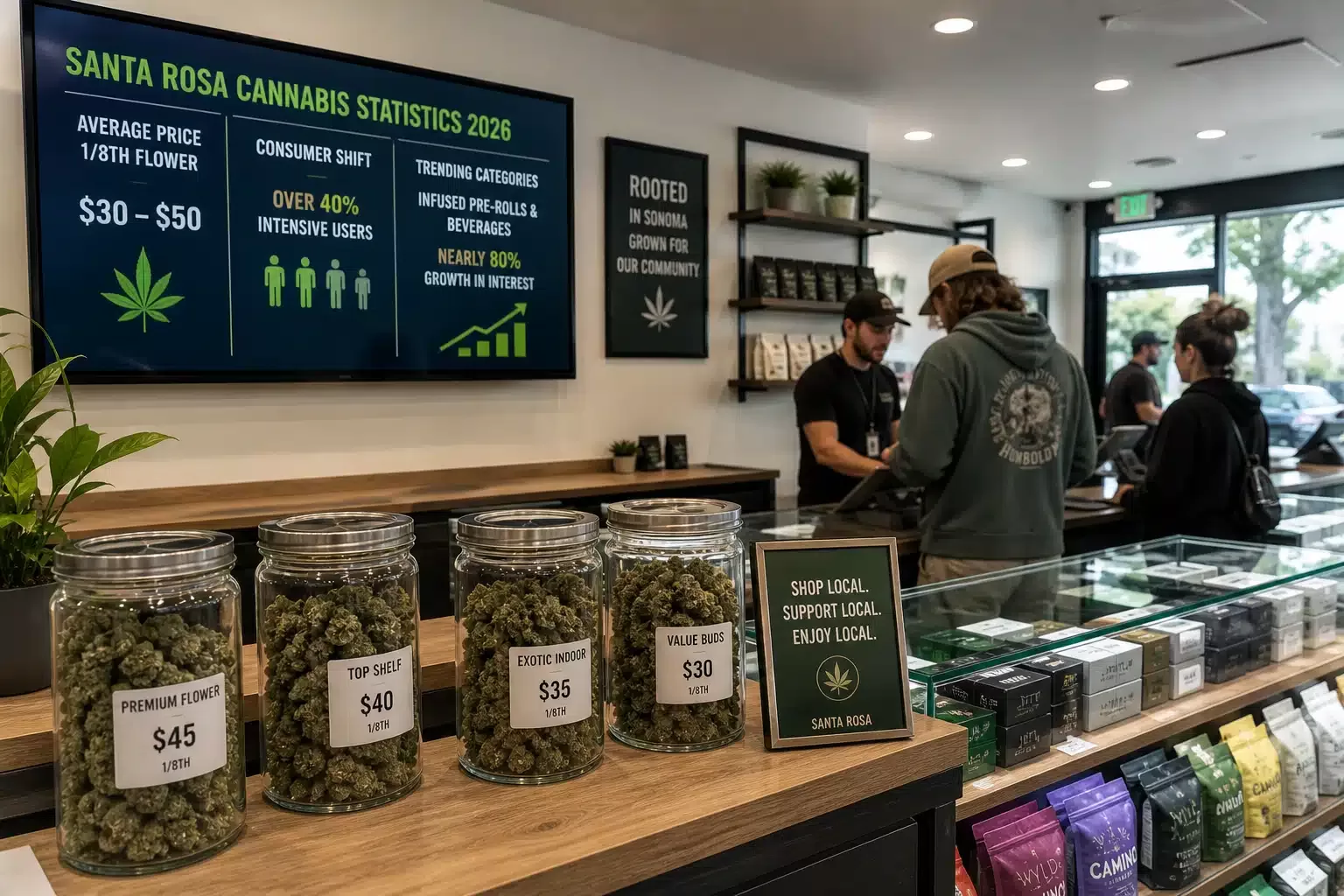
- Pricing Stability: The average price for an eighth of premium flower in Santa Rosa has stabilized between $30 and $50, offering better value than the 2024 highs.
- Consumer Shift: Over 40% of local consumers now identify as intensive users, shopping for bulk deals like half-ounces and full ounces.
- Trending Categories: Infused pre-rolls and cannabis-infused beverages are the fastest-growing segments, with beverages seeing nearly 80% growth in interest since last year.
How is the Santa Rosa Cannabis Market Growing in 2026?
The Santa Rosa cannabis market growth in 2026 reflects a city that is moving past the early days of legalization into a period of professional stability. In the first half of the year, California’s tax revenue projections for cannabis reached an estimated $661 million, a sign that the overall market is recovering from previous year-over-year dips. Locally, Santa Rosa continues to outperform many neighboring cities due to its high density of licensed shops and a consumer base that is highly educated about plant quality.
One of the most impressive Santa Rosa cannabis statistics is the volume of items sold. While dollar amounts have been affected by price compression, the actual number of units leaving the shelves is higher than ever. This means more people are using cannabis more frequently, even if they are paying less per gram than they were two years ago.
What are the Current Cannabis Prices in Santa Rosa?
Price is often the deciding factor for shoppers in Sonoma County. According to the latest Santa Rosa cannabis insights, the cost of flower has reached a point of healthy competition. Wholesale spot prices for premium flower have hovered around $1,050 to $1,080 per pound, which translates to very consumer-friendly retail tags.
Average Retail Prices in Santa Rosa (2026)
| Product Unit | Weight | Typical 2026 Price Range |
| Gram of Flower | 1 g | $8 – $15 |
| Eighth (3.5g) | 3.5 g | $25 – $55 |
| Quarter (7g) | 7 g | $45 – $90 |
| Ounce (28g) | 28 g | $160 – $280 |
| Vape Cartridge | 1 g | $35 – $60 |
As you can see, the value is in the volume. Santa Rosa dispensary trends show that ounces and halves are becoming the standard purchase for residents, while tourists and social users still lean toward the smaller, convenient eighths.
What are the Leading Santa Rosa Dispensary Trends?
The way people shop in Santa Rosa is changing. It is no longer just about the highest THC percentage. Today, the Santa Rosa cannabis market trends show a deep interest in the entourage effect—the relationship between cannabinoids and terpenes.
The rise of purpose-driven shopping
Instead of asking for a heavy Indica, shoppers are now looking for specific outcomes. We see a significant increase in requests for:
- Sleep Support: High demand for products containing CBN.
- Anxiety Relief: A shift toward 1:1 or 2:1 CBD-to-THC ratios.
- Focus and Creativity: Increased interest in THCV and minor cannabinoids.
Convenience and technology
Another major factor in Santa Rosa cannabis statistics is the rise of digital ordering. Nearly 25% of all local transactions now begin online. Whether it is for express pickup or delivery, residents of Santa Rosa are prioritizing speed and convenience. Dispensaries that offer integrated app experiences and loyalty programs are seeing the highest retention rates.
What Products are Santa Rosa Consumers Buying Most?
While flowers still reigns supreme, accounting for roughly 45% of total sales, other categories are closing the gap. If you look at the growth rates, the real excitement is in the alternative formats.
- Infused Pre-rolls: These aren’t your average joints. Often coated in kief or injected with diamonds, these products satisfy the intensive user who wants potency without the mess of dabbing.
- Beverages as Alcohol Alternatives: Many in the Santa Rosa area are replacing their evening glass of wine with a cannabis-infused seltzer. This category is projected to add hundreds of millions in sales nationwide by the end of the decade, and our local trends mirror that growth.
- Wellness Edibles: Low-dose and microdose mints or gummies are becoming a staple for professionals who want the benefits of cannabis without a heavy impairment.
How Does Local Demand Impact Santa Rosa Cannabis Statistics?
Santa Rosa is unique because of its proximity to the world’s best cultivation sites. This means our Santa Rosa cannabis statistics often reflect a more discerning customer. About 47% of Americans have tried cannabis, but in a place like Sonoma County, that number is likely much higher.
- Intensive Users: Frequent or daily users make up a core part of the local economy, driving demand for sustainable and organic cultivation practices.
- Tourism Impact: During the harvest season and summer months, we see a spike in cannabis tourism, where visitors look for the high-end, boutique brands that California is famous for.
- Demographic Expansion: One in three women now consume cannabis, and the over-60 “Silver Tsunami” demographic is the fastest-growing group of new users in the city.
Also read: Cannabis for Anxiety in Santa Rosa: What Locals Should Know
What Does the Future Look Like for Santa Rosa Cannabis?
The future of the industry in our city looks like integration. We are moving away from the “clandestine” feel of old-school shops and toward a world where cannabis is treated like fine wine or craft beer. The Santa Rosa cannabis market growth in the coming years will likely be driven by social consumption lounges and more education-heavy retail environments.
As prices continue to stabilize and the illicit market shrinks—projected to be overtaken by the legal supply by the end of 2026—consumers can expect even safer, more consistent products. The focus is shifting from “how high can I get?” to “how can this plant improve my day-to-day life?”
At The Sweet Spot, we pride ourselves on being more than just a retail store; we are your neighbors in this evolving industry. We use these Santa Rosa cannabis insights to curate a selection that reflects the diverse needs of our community. Whether you are looking for the best price on an ounce or a high-end infused beverage for a Saturday night, we are here to ensure your experience is as smooth as the Sonoma coast.
Frequently Asked Questions
What are the latest Santa Rosa cannabis sales statistics for sales?
In 2026, Santa Rosa remains a top-performing market in Northern California, contributing to a state excise tax revenue projected to reach over $660 million for the 2026-27 fiscal year.
How is the Santa Rosa cannabis market growth changing?
Growth is now driven by product diversification, specifically in the beverage and infused pre-roll categories, rather than just raw flower sales.
What is the average price of an eighth in Santa Rosa?
You can find an eighth for as low as $25 in the value tier, while premium, boutique flowers generally range between $45 and $55.
Are there any new Santa Rosa dispensary trends for 2026?
The biggest trends include a move toward “purpose-driven” shopping (buying for specific effects like sleep or focus) and a massive increase in online pre-ordering and delivery.
Who are the main consumers in the Santa Rosa cannabis market?
While Millennials and Gen Z still account for over 60% of purchases, there is significant growth among women and adults over the age of 60.