

If you’ve made it to harvest, trimming is one of the last big steps between raw flower and cleaner, better-looking buds. Learning how to trim cannabis properly can improve appearance, airflow, dryness, and the overall quality of your final product. It also helps remove extra leaf material that can make buds harsher and less polished.
The short answer: trim away the large fan leaves first, then carefully remove the smaller sugar leaves around the flower without cutting into the bud itself. The trick is to clean up the flower while protecting the trichomes as much as possible.
Quick Take
- The easiest way to learn how to trim cannabis is to remove fan leaves first, then shape the bud gently with trimming scissors.
- Wet trimming and dry trimming both work, but they feel very different and can affect workflow and handling.
- The goal is not to “shave” the bud too hard. You want a cleaner flower, not a damaged flower.
What does trimming cannabis actually mean?
Trimming is the process of removing excess leaves and plant material from harvested cannabis flower. It usually happens right after harvest or after the plant has dried, depending on the method you choose.
What gets removed during trimming?
Most trimming cannabis buds involves removing:
- Large fan leaves
- Extra stem pieces
- Small leafy tips sticking out too far
- Some sugar leaves around the bud
What stays?
You usually want to keep:
- The flower itself
- Trichome-rich bud structure
- Enough shape to keep the bud intact
This is why how to trim weed is not just about cutting randomly. It’s more like a cleanup with a purpose.
Why does trimming matter so much?
A good trim does more than make buds look nice.
Trimming can help with:
- Better airflow during drying
- Cleaner appearance
- Less leafy harshness
- Easier storage and curing
- More polished final flower
It also helps separate what people want to keep from what is better saved as trim for other uses.
Leafly notes that trimming is part of the larger harvest process and that both wet and dry trimming are common methods, depending on your setup and goals.
When should you trim cannabis?
This is where beginners usually have their first real choice.
You generally have two main options:
- Wet trim
- Dry trim
Both are common. Neither is “wrong.” But they work best in different situations.
Should you wet trim or dry trim?
This is one of the most searched questions in any cannabis trimming guide, and for good reason.
Wet trimming
Wet trimming means you trim the buds soon after harvest, before they fully dry.
Dry trimming
Dry trimming means you hang the plant or branches to dry first, then trim later.
Here’s a simple comparison:
| Method | When You Trim | Pros | Cons |
| Wet trim | Right after harvest | Faster cleanup, easier to cut fresh leaves, less mess later | Buds can feel stickier, easier to over-handle |
| Dry trim | After drying | Slower, often preferred for a more controlled finish | Leaves can curl inward and be harder to remove |
Leafly explains that in wet trimming, buds are trimmed before drying, while in dry trimming, drying happens first and trimming happens after.
Which one is better for beginners?
For many beginners:
- Wet trim feels easier because the leaves are more visible and easier to snip.
- Dry trim can feel more forgiving if you want to move more slowly and avoid handling very fresh, sticky flowers.
A recent scientific paper on postharvest trimming methods also noted that wet vs dry trimming is widely used in practice, but the postharvest process has often been guided more by experience than by hard standardization.
What tools do you need before trimming marijuana plants?
You do not need a huge setup, but the right tools make a big difference.
Basic trimming setup
Before trimming marijuana plants, gather:
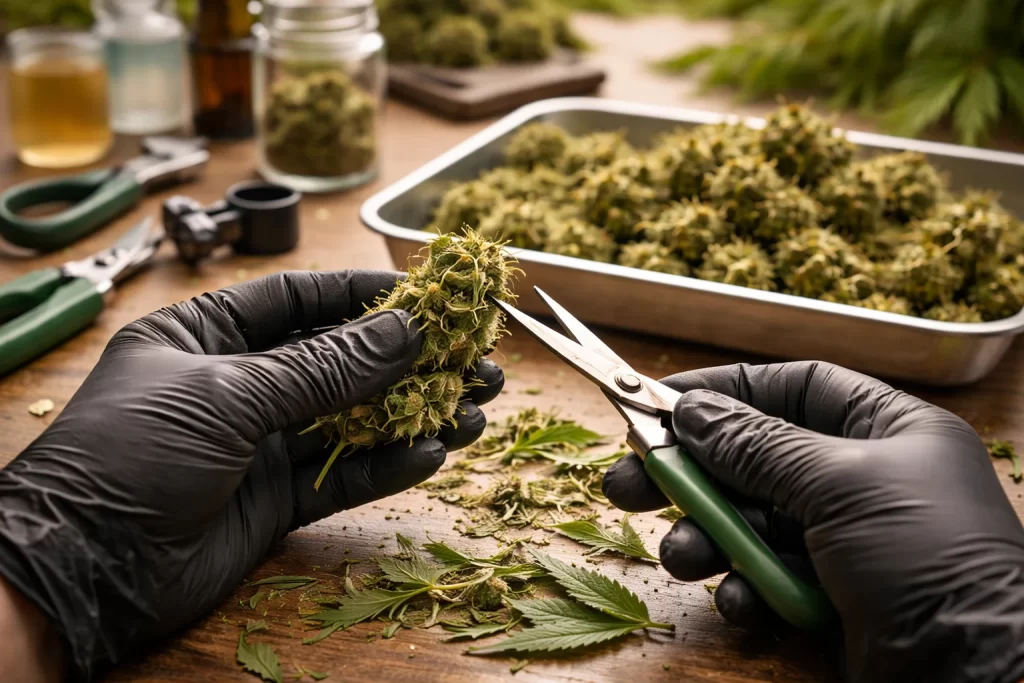
- Sharp trimming scissors
- Pruning shears
- Nitrile gloves
- A clean tray or table
- Rubbing alcohol for sticky blades
- Containers for finished buds
- A separate bowl or tray for trim
Nice extras
Optional but useful:
- Magnifying light
- Comfortable chair
- Anti-fatigue mat
- Timer or music if you’ll be trimming a lot
A sticky, poorly organized trimming setup gets frustrating fast. The cleaner your station, the smoother the work.
How to trim cannabis step by step
If you want the practical beginner method, follow this process.
How to trim cannabis in 7 simple steps
Step 1: Cut the plant into workable sections
Instead of wrestling with a whole plant, cut it down into branches.
This makes it easier to:
- See the buds clearly
- Hold the branch steadily
- Trim more evenly
Leafly recommends breaking the plant into smaller branches before trimming.
Step 2: Remove the fan leaves first
Fan leaves are the large, classic cannabis leaves that stick far out from the flower.
These are the easiest leaves to remove and should usually come off first.
Why this helps:
- Clears your view
- Speeds up the rest of the trim
- Makes the buds easier to shape
This is one of the most important cannabis bud trimming tips for beginners because it keeps you from getting overwhelmed early.
Step 3: Separate the buds visually
Once the fan leaves are off, you’ll be able to see the flower structure much better.
Now look for:
- Leafy tips sticking out
- Small sugar leaves
- Excess stem
You’re not trying to make the bud unnaturally perfect. You’re just cleaning it up.
Step 4: Trim the sugar leaves carefully
Sugar leaves are the small leaves tucked closer to the flower. Many of them are coated in trichomes, which is why you do not want to cut aggressively.
Good rule:
Trim what sticks out too far, not what belongs to the flower.
This is where many people make the mistake of “barbering” the bud too hard.
Step 5: Shape the bud lightly
Now give the bud a light visual cleanup.
You want it to look:
- Cleaner
- More even
- Less leafy
- Still natural
If you are learning how to trim cannabis for the first time, this is where restraint matters most.
Step 6: Set aside the trim separately
Do not throw away your trim automatically.
Trim may still contain:
- Small trichomes
- Useful plant material
- Material people sometimes save for other purposes
Keep:
- Finished buds in one container
- Trim in another
- Waste separately
Step 7: Clean your scissors often
Sticky scissors can start tearing instead of cutting.
Use rubbing alcohol periodically to clean:
- Scissor blades
- Resin buildup
- Sticky tool surfaces
This is a small step that makes a big difference during longer trimming sessions.
What should trimmed buds actually look like?
This is a great question because many beginners trim too much or too little.
A well-trimmed bud should:
- Look clean, not shredded
- Have fewer leaves sticking out
- Keep its natural shape
- Still looks like a flower, not a carved nug
Signs you trimmed too aggressively:
- Bud looks flattened or hacked apart
- Too much of the outer flower was removed
- You can see obvious cut damage everywhere
Signs you trimmed too lightly:
- Too many leafy tips remain
- Bud looks fluffy and messy
- Drying or curing may be less even
A good trim is about balance, not perfection.
How do you protect trichomes while trimming cannabis buds?
This is where quality really comes into play.
Trichomes are the tiny resin glands on the flower. They’re delicate, especially when buds are dry and over-handled.
Cannabis bud trimming tips for protecting trichomes
- Handle buds gently
- Avoid squeezing the flower
- Hold stems or branch ends when possible
- Use sharp scissors, not dull ones
- Keep your workspace cool and clean
A recent study on postharvest trimming techniques noted that trichome handling is one of the reasons trimming method and timing matter so much in commercial and medical cannabis processing.
Is trimming weed for drying different from trimming after drying?
Yes, and the difference matters.
If you’re trimming weed for drying:
You are usually doing a wet trim.
That means:
- Leaves are easier to remove
- Buds feel softer and stickier
- You’ll likely hang trimmed branches or buds after
If you’re trimming after drying:
You are doing a dry trim.
That means:
- Leaves may curl inward
- Buds feel more delicate on the outside
- Handling needs to be more careful
Leafly notes that drying usually happens before trimming in dry-trim setups, and trimmed buds are ready for curing once properly dried.
What are the biggest beginner mistakes when trimming weed?
This is where people usually lose time—or quality.
Common trimming mistakes
1. Using dull scissors
This crushes and tears instead of cutting cleanly.
2. Trimming too aggressively
Over-trimming can remove more than just leaves.
3. Handling buds too much
Too much touching can knock off resin and damage the structure.
4. Mixing trim and finished buds together
That creates more mess and confusion later.
5. Trimming in a dirty workspace
Dust, pet hair, and random debris are not part of a clean harvest.
6. Forgetting comfort and hand strain
Long trimming sessions are repetitive. Your hands, wrists, neck, and shoulders will notice.
OSHA notes that repetitive motions, awkward postures, and poorly designed work setups can contribute to hand, wrist, shoulder, and tendon strain over time.
How can you trim more comfortably and efficiently?
If you plan on doing more than a few branches, comfort matters.
Better trimming setup tips
- Sit with back support
- Keep your elbows close to your body
- Use good lighting
- Take short breaks
- Stretch your hands and shoulders
- Clean tools regularly
- Don’t rush
OSHA guidance on repetitive work repeatedly emphasizes that posture, rest breaks, lighting, and tool design can reduce strain in hand-intensive tasks.
That may sound simple, but it matters a lot during cannabis harvest trimming.
What happens after trimming?
Trimming is not the finish line. It’s part of the bigger harvest process.
After trimming, the next step is usually:
- Drying (if not already done)
- Then curing
Why curing still matters
Even beautifully trimmed buds can turn out poorly if drying or curing is rushed.
Leafly explains that after drying and trimming, buds are typically cured in airtight containers, and that proper curing helps preserve flavor, aroma, and overall quality. Leafly also notes that fresh cannabis can lose up to 75% of its weight during drying and trimming due to moisture loss and removed plant material.
Basic curing reminder
Once properly dried:
- Store buds in airtight glass jars
- Keep humidity in a safe range
- Open jars periodically during early curing
Leafly recommends a curing humidity range of about 55–65% in containers, and notes that curing often takes two weeks to a month.
Also read: Best Low Intensity Cannabis Strains for Beginners and Mild Effects
What should you remember about how to trim weeds?
If you only remember a few things from this cannabis trimming guide, keep these in mind:
Quick takeaways
- The best way to learn how to trim cannabis is to remove big leaves first, then shape the bud gently.
- Trimming cannabis buds is about cleanup, not over-cutting.
- Wet trim and dry trim both work, but they feel different and affect the workflow.
- Clean tools and gentle handling help protect flower quality.
- A good trim still needs good drying and curing afterward.
If you’re new to cannabis harvest trimming, keep it simple. Go branch by branch. Focus on clean cuts, not speed. That slower, cleaner approach is usually what leads to better-looking buds and a less frustrating experience—something educational brands like The Sweet Spot 420 often help beginners understand more clearly.
FAQs: How to Trim Cannabis
1. How to trim cannabis for beginners?
The easiest way to learn how to trim cannabis is to remove the large fan leaves first, then carefully trim the smaller sugar leaves around the bud without cutting into the flower.
2. What is the difference between wet and dry trimming cannabis buds?
When trimming wet cannabis buds, you trim right after harvest. When dry trimming, you let the plant dry first and trim later.
3. How to trim weed without damaging the buds?
If you want to learn how to trim weed safely, use sharp scissors, handle buds gently, and avoid squeezing or over-cutting the flower.
4. What tools do I need for trimming marijuana plants?
A basic trimming marijuana plants setup usually includes trimming scissors, pruning shears, gloves, a clean tray, rubbing alcohol, and containers for buds and trim.
5. What happens after cannabis harvest trimming?
After cannabis harvest trimming, the next steps are usually drying and curing, depending on whether you used a wet-trim or dry-trim method.